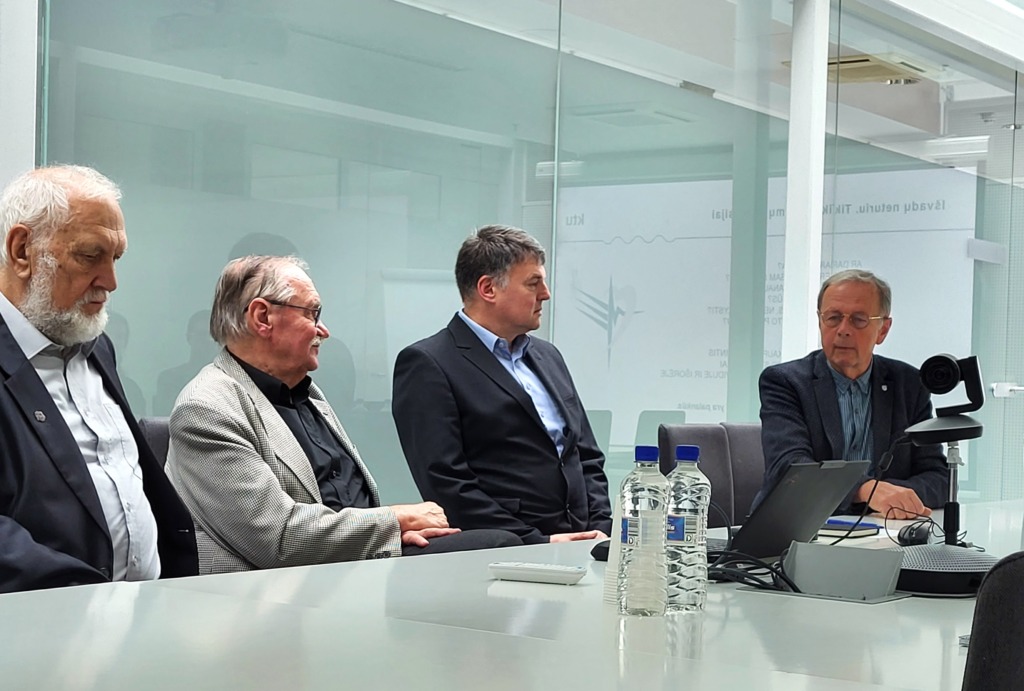
The event offered an opportunity to look back at how biomedical engineering developed in Lithuania and to explore the people, ideas and scientific traditions that have shaped the field over the decades. The speakers shared personal experiences, memories and insights, while also reflecting on the knowledge and competences that continue to support the further development of biomedical engineering.
In his lecture “My Work Related to Biomedical Engineering”, Prof. Habil. Dr. Audris Kopustinskas reflected on the early development of medical electronics in Lithuania and the technological context in which the field emerged. He spoke about the evolution of telemechanics, research into ultrasound technologies and the establishment of the Medical Electronics study program at Kaunas University of Technology. He also highlighted the broader technological changes of the time, including the influence of space programs on the development of electronics.
Prof. Habil. Dr. Algimantas Kriščiukaitis, presenting “Synergy of Interdisciplinary Competences in the Biomedical Innovation Ecosystem”, focused on the interdisciplinary nature of biomedical engineering and its role in advancing healthcare. He presented his team’s work in non-invasive health assessment, the electrophysiology of excitable cells and research into electrical phenomena in tissues, while also sharing experience gained from experimental surgical procedures. His presentation highlighted one of the central ideas of the event: major advances in healthcare technology emerge when professionals from different disciplines work together. Medical specialists, electronics engineers, physicists, biophysicists, data analysts and humanities scholars can bring together different perspectives, knowledge and creativity to develop new solutions.
The lecture series concluded with Prof. Habil. Dr. Arūnas Lukoševičius and his presentation “The Driving Force Behind Biomedical Engineering Acceleration – Expertise Built Over Decades”. As the founder of the Biomedical Engineering Institute, he looked back at its origins, the development of its vision and the experience gained through its first projects. At the same time, the presentation looked towards the future. One of the key questions was how knowledge and expertise accumulated over decades can not only be preserved but also continuously developed in a rapidly changing scientific and technological environment. A strong, motivated and creative team was highlighted as one of the main factors behind the Institute’s long-term success. People, their competences, collaboration and willingness to share knowledge provide the foundation for developing new ideas and ensuring continuity between generations of researchers. The discussion also touched on future directions in biomedical engineering, including multimodal monitoring, health prediction and prevention, personalised solutions and the increasing role of artificial intelligence in research. Participants reflected on which of these areas may be particularly relevant to the Institute and how its long-standing expertise can support new projects and strategic development.
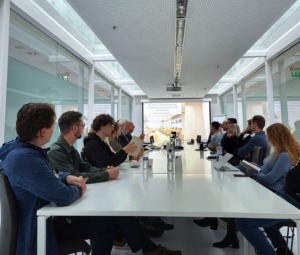
The lecture series showed that today’s technological achievements are built on decades of work, accumulated knowledge and steadily developed competences. From the first steps in medical electronics to personalised healthcare and artificial intelligence, progress in biomedical engineering has always been driven by people and their ability to create, collaborate and share knowledge. Passing this experience on to new generations, continuing to develop it and applying it to emerging ideas will remain an important foundation for the biomedical innovations of the future.