According to the KTU professor, heart rhythm disorders, particularly atrial fibrillation, are directly linked to an increased risk of ischaemic stroke. If an arrhythmia goes undetected, the patient may not receive the appropriate treatment, which increases the likelihood of a recurrent stroke.
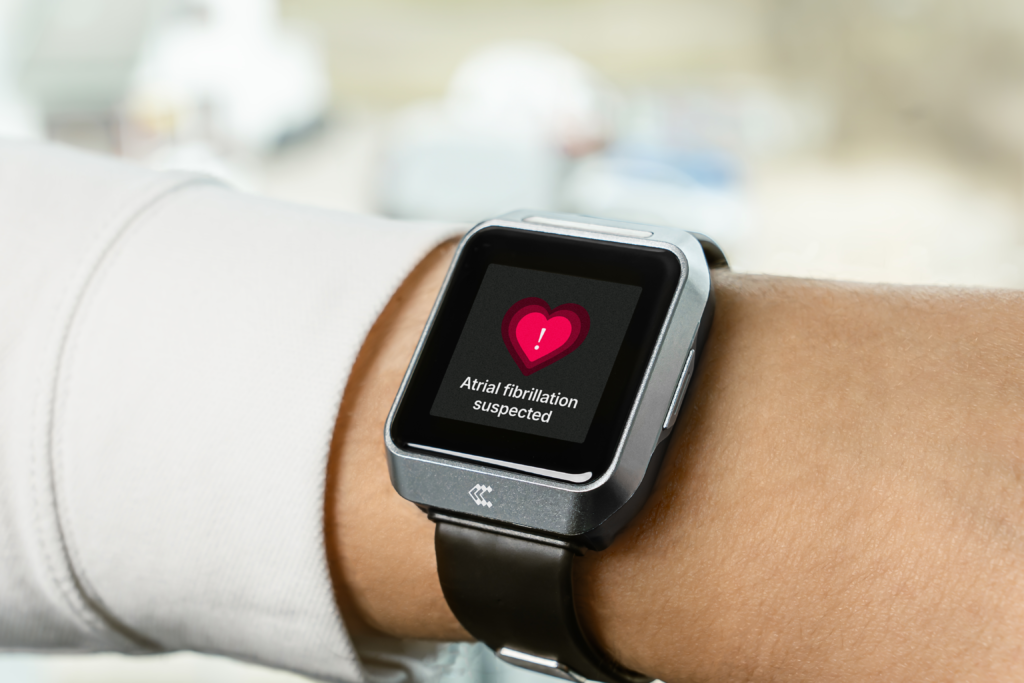
The technology developed and continuously improved by KTU researchers and Teltonika Telemedic enables continuous heart rhythm monitoring. When a suspicious episode is detected, the system alerts the patient via an on-screen notification or vibration. This allows the event to be captured precisely when it occurs rather than days or weeks later during a doctor’s appointment.
It does not require adhesive electrodes or additional wires – the user simply touches the electrodes integrated into the device. Within about a minute, a more detailed ECG recording is made, showing the heart’s electrical activity from several directions, and the data are then sent to the doctor.
In addition, the system will analyse not only the fact that an arrhythmia has occurred. It will use an arrhythmia aggregation parameter showing how episodes of rhythm disturbance are distributed over time – whether they occur evenly throughout the monitoring period or cluster into groups of short episodes.
“For a doctor, this kind of information would provide significantly more value than the mere fact that an arrhythmia was detected,” says Marozas. According to the KTU professor, such assessment makes it possible to monitor disease progression and assess a rising risk of complications at an earlier stage.
Patent Marks a Step Towards Wider Application
To ensure that the data are reliable in real-life conditions, a specialised signal processing algorithm has also been integrated into the system. Movement, changes in body position or physical activity can distort signals, so the system first assesses their quality and only then sends suitable segments for more detailed analysis.
“The system distinguishes dangerous arrhythmias from noise caused by everyday activity using a multi-stage signal analysis process,” says Marozas.
The patent granted to the system confirmed its technological novelty and became an important step towards further clinical trials and wider application. According to Marozas, the patent covers not only the wrist-worn device itself, but also arrhythmia analysis algorithms, arrhythmia aggregation and other new assessment parameters.
“The patent obtained is an important recognition of many years of interdisciplinary work and technological novelty. However, the greatest motivation remains saving patients’ lives, improving their quality of life and advancing medicine in a way that benefits society,” says Marozas.
A large interdisciplinary team contributed to both the patent application and the development of the technology, including KTU researcher Andrius Petrėnas, cardiologist Justinas Bacevičius from Vilnius University Hospital Santaros Clinics, KTU researchers Andrius Sološenko, Saulius Daukantas and Monika Butkuvienė, as well as KTU doctoral students, engineers, and medical residents from Vilnius University Hospital Santaros Clinics. For patients, the “TeltoHeart” device primarily means a simpler route to a doctor’s consultation. According to Ilgevičius, if a person is recovering at home after surgery or a serious illness, they do not necessarily need to travel to a healthcare facility for tests.
The solution can now be implemented in the majority of healthcare institutions across Lithuania. Patients can use the solution together with a physician’s consultation, while telemedicine services are already available in some outpatient clinics through projects funded by the European Union.
Nevertheless, broader reimbursement of such solutions for at-risk patients, such as people who have suffered a stroke, remains a future objective. According to the technology’s developers, reimbursement policies may ultimately determine whether advanced remote monitoring solutions become widely accessible to the patients who need them most.